A medical bill is not a final number. Reviews of hospital billing
commonly turn up errors, and you have the right to question a charge
you believe is wrong. Disputing a bill is a clear, repeatable process,
and this guide walks through every step.
Can you dispute a medical bill?
Yes. A bill from a hospital or provider is a request for payment, not a
verdict, and you can challenge charges you think are incorrect. Billing
errors are common enough that reviewers who examine itemized statements
often find at least one, from a simple duplicate line to a charge for a
service that never happened. When a dispute succeeds, what commonly
happens is that the provider corrects the error and sends a revised
bill for a smaller amount. There is no promised result, but the process
is well worn and worth following whenever a bill looks off.
The steps below move from gathering the right documents to sending a
written dispute and following up. You do not need to be an expert or
hire anyone to start. You need the detail of what you were charged, a
way to check it, and a clear letter that states what is wrong and what
you are asking the provider to do about it. Some bills follow their own
rules, such as an ambulance bill, which is largely outside the No
Surprises Act, so if that is what you are facing, start with
how to negotiate an ambulance bill.
Good to know
Disputing a charge does not mean refusing to pay the whole bill. You
can pay the parts you agree with and dispute only the lines you
believe are wrong. This page is general information and is not legal
advice.
Step 1: Get your itemized hospital bill
The first summary bill most people receive shows a few broad categories
and one balance due. You cannot dispute what you cannot see, so the
starting point is a fully itemized statement that lists every service,
supply, medication, and fee on its own line, with a date, a
description, a billing code, the quantity, and the price for each item.
Call the billing number on your statement and ask for a fully itemized
bill, or send a written request. You do not need to give a reason to
receive one. If you want the exact wording, a phone script, and your
rights spelled out, our deep dive on
how to request an itemized hospital bill
covers the request end to end, including what each column on the
statement means. Once the itemized version arrives, you have the raw
material every later step depends on. The same first step applies to an
emergency room bill,
where the visit level and facility fee are the lines most worth checking.
Step 2: Compare the bill against your EOB
If you have insurance, your plan sends an explanation of benefits, or
EOB, for the same visit. It is not a bill. It is the plan's record of
what the provider charged, what the plan allowed, what the plan paid,
and the amount you are responsible for. Placed side by side with the
itemized bill, the EOB becomes a checking tool.
Match them line by line. The patient responsibility on the EOB should
line up with the balance the provider is asking you to pay. If the bill
asks for more than the EOB says you owe, that gap is one of the most
common and most winnable disputes, because you have the plan's own
document backing you up. Watch for a service the plan denied that the
provider then billed to you in full, a charge that was supposed to be
covered, or a total that simply does not reconcile. Our guide to
reading an EOB and what to do when it does not match your bill
explains each amount and how to read a mismatch. If you are uninsured,
you will not have an EOB, so your check in the next step leans on the
itemized detail and the provider's own cash or self pay pricing.
Step 3: Find the errors worth disputing
Not every line that looks unfamiliar is an error, and not every error
is worth a formal dispute. Focus on charges that are clearly wrong or
clearly large. If a line leaves you unsure what it even is, our guide to
how to read a hospital bill
explains the codes and fees. These are the types that come up most
often:
Duplicate charges. The same service, supply, or
medication billed twice, sometimes under slightly different
descriptions on different lines.
Services not received. A charge for a test,
procedure, room, or item you never got, or a charge dated to a day
you were not there.
Wrong quantity. A count that is too high, such as
being billed for hours of a service, several doses, or supplies well
beyond what you actually used.
Upcoding. A routine visit or service billed at a
higher, more expensive level than what actually happened.
Unbundling. One procedure that should be a single
code split into several separately priced lines, which inflates the
total.
Price does not match the EOB. The provider is
asking for more than the patient responsibility your plan calculated.
For a fuller walkthrough of what these look like on a real statement
and how to spot them, see the red flags section of our
itemized bill guide.
Write down each line you plan to question, the reason it looks wrong,
and the amount. That short list becomes the body of your dispute
letter in the next step.
Step 4: Write and send your medical bill dispute letter
A phone call can fix a small mistake, but a written dispute creates a
paper trail, and a paper trail is what protects you if the matter drags
on or the account is later sent to collections. A strong medical bill
dispute letter is short and specific. It includes:
Your name, the account number, and the date of service
A clear statement that you are formally disputing specific charges
An itemized list of each disputed line and the reason it is wrong
What you are asking the provider to do
A request for a written response and a corrected itemized statement
Your contact information and the date
Send it to the billing or patient financial services address on your
statement. Send it by certified mail with return receipt requested.
Proof of delivery matters because it fixes the date the provider
received your dispute, which can start or preserve your rights if the
bill is in collections, and it removes any argument that your letter
was never received. Keep a copy of the letter and the mailing receipt.
If you are uninsured or paying cash
The federal No Surprises Act gives uninsured and self pay patients an
extra path. If you received a good faith estimate before your care
and the final bill is 400 dollars or more above that estimate, you
may dispute it through the patient provider dispute resolution
process, generally within 120 days of the bill, and an independent
reviewer decides the amount. This route is for uninsured and self pay
patients only. If your visit went through insurance, your path is the
EOB comparison above and, where a claim was denied or underpaid, an
appeal with your insurer. If the charge is a surprise out of network
bill, it may be illegal in the first place; see our guide to the
No Surprises Act.
You do not have to draft the letter from scratch. Use the free template
filler below to build a complete, formatted dispute letter from your
details. Fill in the provider, the account, the date of service, each
disputed line with its reason, and what you want the provider to do,
then copy or print the result. Everything runs in your browser, and
nothing you enter leaves your device.
Medical bill dispute letter template
Enter your details. The letter updates as you type. Nothing you enter
leaves your device.
Disputed Items
Step 5: Follow up, escalate, and use your leverage
Sending the letter is the start, not the end. Give the billing
department a reasonable window, then follow up in writing if you do not
hear back. Reference the date you sent the dispute and the certified
mail receipt. Keep a simple log of every call and letter, including the
date, the name of the person you spoke with, and what was said. That
record is your leverage.
If the billing department will not correct a clear error, escalate.
Ask to speak with a billing supervisor or a patient advocate or patient
representative, a role many hospitals staff specifically to resolve
billing problems. If your dispute involves a denied or underpaid
insurance claim, file a formal appeal with your insurer, and be aware
that appeals usually have a deadline, often 30 to 60 days from the
denial, so act promptly. If the provider still will not budge, you can
escalate outside the hospital: your state attorney general or state
department of insurance takes consumer complaints, and a written
complaint on file often gets attention that phone calls do not. If the
bill is large or the dispute is wearing you down, a
medical bill advocate
can take the case on for a fee. If the charges are correct but simply
more than you want to pay, the next move is to
negotiate the hospital bill.
One more piece of leverage is worth knowing. If your account has been
turned over to a debt collector, disputing the debt in writing triggers
protections under federal law, including the collector's duty to pause
and verify the debt. Our guide to
medical bills, collections, and your rights
explains those validation rights and how to use them.
What to do if the bill goes to collections during your dispute
A dispute and a collection notice can overlap, and that is stressful,
but it does not erase your rights. If a collector contacts you, send a
written dispute within 30 days of receiving their validation notice.
The collector must then pause collection on that amount until it sends
you verification of the debt. Do not ignore the notice, and do not
assume that a bill in collections can no longer be corrected. A charge
that was wrong on the original bill is still wrong after it is handed to
a collector, and the provider can still fix it.
Keep disputing the underlying charge with the provider while you
exercise your rights with the collector. For the full timeline, what
collectors can and cannot do, see our guide on
whether and when medical bills go to collections,
and for how a collection is treated on your report, see whether
medical bills affect your credit.
If you cannot afford the corrected bill
Sometimes the bill is accurate, or it is corrected and still more than
you can pay. Disputing errors and asking for help are not the same
thing, and you can do both. Once the amount is right, ask the provider
about a payment plan, and check whether you qualify for the hospital's
financial assistance or charity care program, which can reduce or erase
the balance based on your income.
Correcting errors first still matters here, because a smaller, accurate
bill is easier to get approved for assistance and easier to pay down.
Our guide to
medical bill forgiveness and hospital financial assistance
explains who qualifies, how to find your hospital's policy, and how to
apply.
Frequently asked questions
How do I write a letter to dispute a medical bill?
State your name, the account number, and the date of service, then
say clearly that you are formally disputing specific charges. List
each disputed line and the reason it is wrong, say what you want the
provider to do, and ask for a written response and a corrected
itemized statement. Send it to the billing address by certified
mail and keep a copy. The free template on this page builds the
letter for you.
Can you dispute a medical bill and win?
You can, and disputes over clear errors are often resolved in the
patient's favor. There is no guaranteed result, but when a dispute
succeeds, what commonly happens is the provider corrects the error
and reissues the bill for a lower amount. Disputes backed by
documents, such as a bill that asks for more than your EOB says you
owe, tend to be the strongest.
What happens when you dispute a medical bill?
The provider reviews the charges you questioned and responds. They
may correct the bill and send a revised statement, explain why the
charge stands, or ask for more information. A written dispute also
creates a record, which protects you if the account is later sent to
collections. Keep notes of every response and follow up if you do
not hear back.
How long do I have to dispute a medical bill?
There is no single nationwide deadline to question a charge with the
provider, and you can dispute a bill even after you have paid it.
Some paths do have time limits: insurance appeals often must be
filed within 30 to 60 days of a denial, and the No Surprises Act
dispute process for uninsured and self pay patients generally runs
within 120 days of the bill. Acting sooner is better, since an
unpaid bill can move toward collections.
Does disputing a medical bill hurt your credit?
Disputing a bill does not by itself hurt your credit. The dispute is
between you and the provider or collector. Separately, the major
credit bureaus no longer include paid medical collections or medical
collection debts under 500 dollars on credit reports, and they wait
a period before newer medical debts can appear. Disputing a debt in
writing with a collector also requires them to pause reporting and
collection until they verify it.
Can I refuse to pay a medical bill I think is wrong?
You can dispute and withhold payment on the specific charges you
believe are incorrect while you work them out, and you can pay the
parts you agree with. Ignoring the whole bill is different and risky,
because an unpaid balance can be sent to collections. The safer path
is to dispute the wrong charges in writing, keep records, and resolve
the accurate portion.
Who do I contact to dispute a hospital bill?
Start with the billing or patient financial services department
listed on your statement. If they will not fix a clear error, ask
for a billing supervisor or a patient advocate. For insurance
issues, contact your insurer to file an appeal. If it is still
unresolved, your state attorney general or state department of
insurance accepts consumer complaints.
Should I send a medical bill dispute letter by certified mail?
Yes. Certified mail with return receipt requested gives you proof of
the date the provider or collector received your dispute. That date
can start or preserve your rights, especially if the account is in
collections, and it removes any claim that your letter was never
received. Keep a copy of the letter and the mailing receipt with
your records.
What if my medical bill goes to collections while I am disputing it?
Send the collector a written dispute within 30 days of receiving
their validation notice. They must pause collection on that amount
until they send you verification of the debt. A charge that was
wrong on the original bill is still wrong in collections, so keep
disputing it with the provider at the same time. Do not ignore the
collection notice.
What is the No Surprises Act and can it help me dispute a bill?
The No Surprises Act is a federal law that protects patients from
certain surprise bills and gives uninsured and self pay patients a
dispute path. If you received a good faith estimate and the final
bill is 400 dollars or more above it, you may use the patient
provider dispute resolution process, generally within 120 days of
the bill, and an independent reviewer sets the amount. This route is
for uninsured and self pay patients. If your care went through
insurance, use the EOB comparison and an appeal with your insurer
instead.
Want the letter written and mailed for you?
The template above is for people who want to do it themselves.
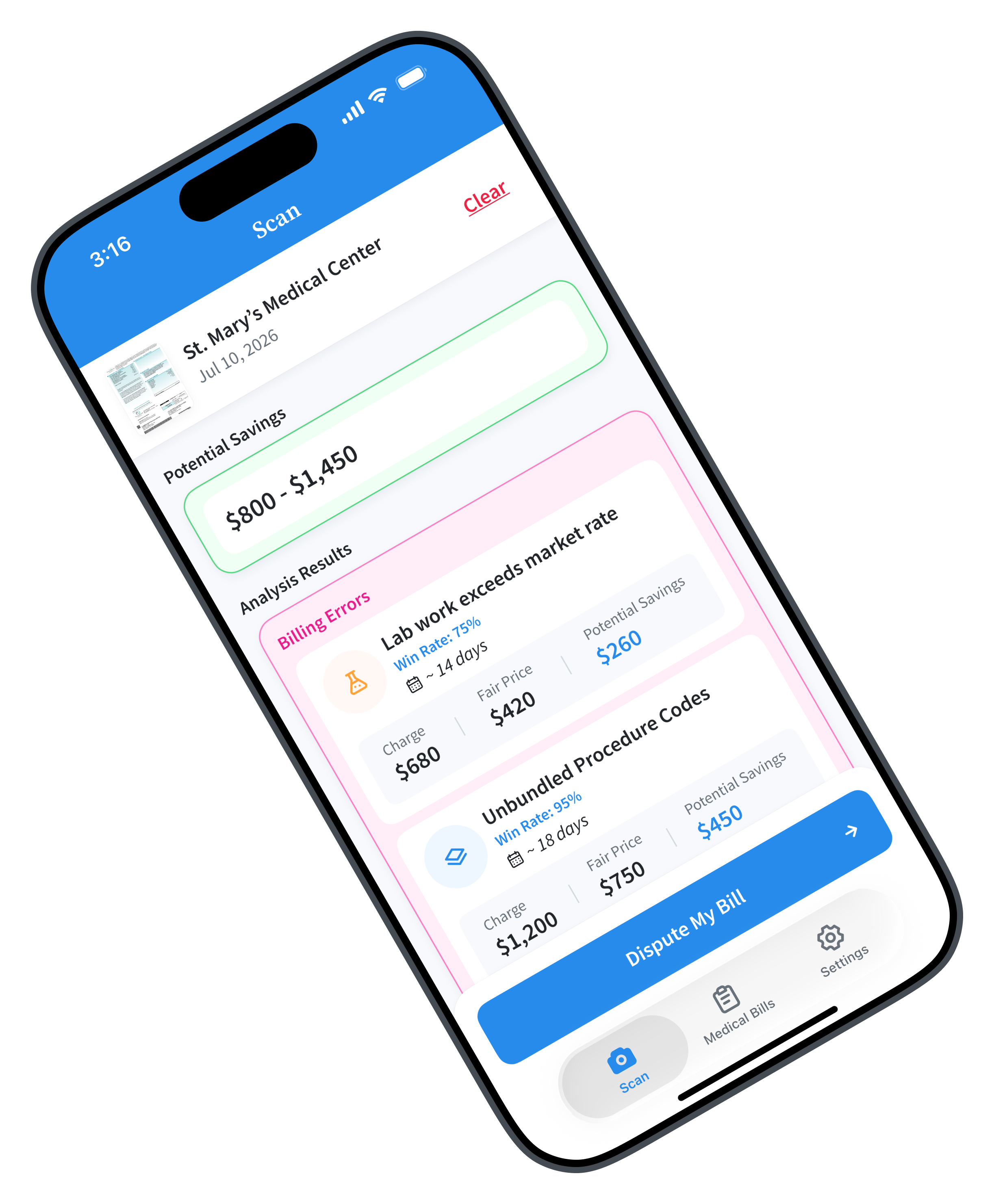
For 29 dollars, MedAdvocate analyzes your actual bill to find
errors you might miss, writes the dispute letter for you, and
sends it by certified mail on your behalf. You upload the bill,
and the rest is handled.
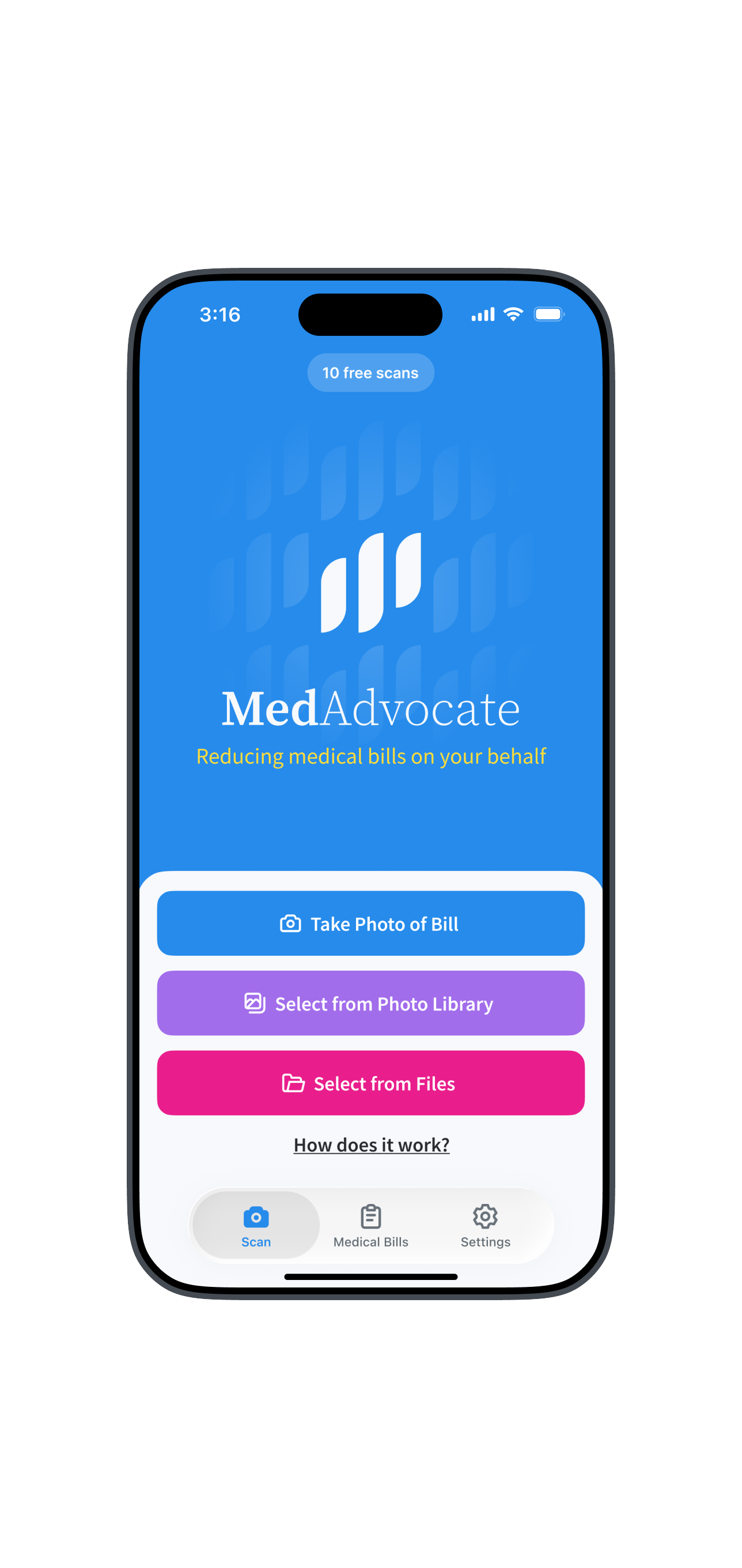
Snap a photo of your itemized bill and MedAdvocate reviews each
line for the mistakes that hide on hospital statements, then helps
you put a dispute letter together for anything worth questioning.