How to Negotiate a Hospital Bill
Hospital bills are negotiable far more often than most people realize. The number on the statement is rarely what anyone actually pays, and hospitals routinely offer discounts, payment plans, and settlements to patients who ask. The leverage is not luck or nerve. It is knowing what to ask for, what the bill should really cost, and when to make your move. This guide gives you the full playbook.
Before you negotiate: check the bill for errors first
The first move in any negotiation is to make sure you are negotiating the right number. Start by requesting a fully itemized bill, since the short summary hides the detail you need. Our guide to requesting an itemized hospital bill covers how to get it and read it.
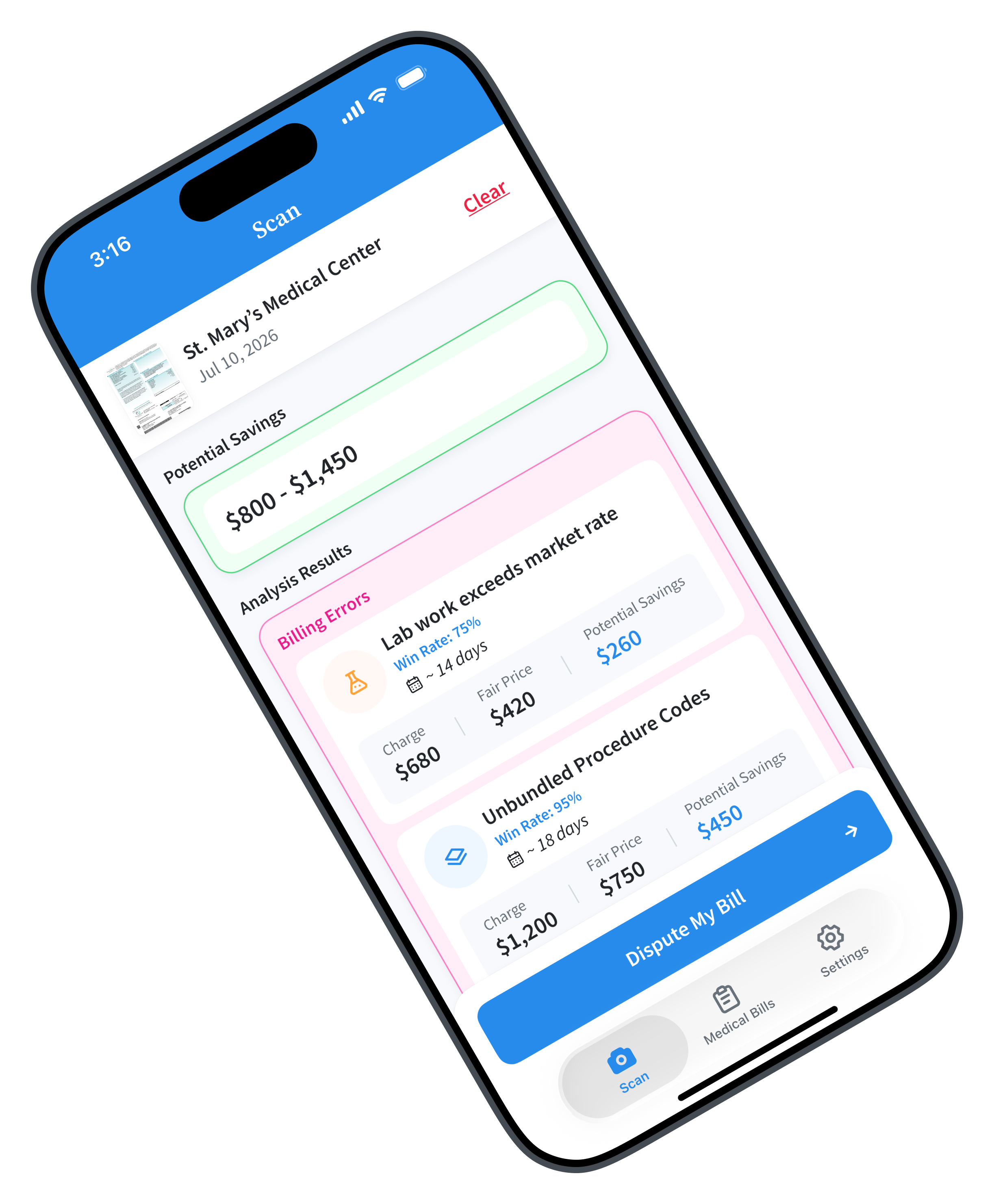
Then check the itemized bill for errors before you offer a dollar. Duplicate charges, services you never received, the wrong quantity, and charges billed at too high a level are common, and every one of them inflates the starting point. A corrected bill negotiates from a lower number, so fixing errors first is worth real money. When you find a charge that looks wrong, put it in writing using the process in our guide to how to dispute a medical bill. Only once the bill is accurate does it make sense to negotiate the total.
Know your leverage
Walking in knowing your leverage changes the whole conversation. A few facts are true at almost every hospital.
The billed amount is rarely what anyone pays. Hospital list prices, the chargemaster, are set high, and insurers, Medicare, and cash payers all pay far less. That gap is your room to negotiate. Hospitals also commonly offer a self pay or prompt pay discount, frequently in the range of 20 to 50 percent, because collecting a smaller amount quickly is often worth more to them than chasing the full balance. These discounts vary widely from hospital to hospital, so you have to ask.
If the hospital is a nonprofit, you have extra leverage. Under federal rules for nonprofit hospitals, the hospital must make a reasonable effort to check whether you qualify for financial assistance before it takes aggressive collection steps like sending the account to a collector, reporting it to the credit bureaus, or suing. It also cannot charge a patient who qualifies for assistance more than the amounts generally billed to insured patients, so the full list price is rarely the number that should stand. Asking to be screened for financial assistance, and pointing to these rules, is one of the strongest moves you have.
How to prepare and set your target number
Negotiation goes better when you name a number and can defend it, rather than simply asking for a vague discount. Preparation is what gives you that number.
Gather the itemized bill, your explanation of benefits if you have insurance, and a sense of what you can realistically pay, whether that is a lump sum now or an amount each month. Then set a target using a benchmark rather than a guess. Federal price transparency rules require hospitals to post their standard charges, including cash prices and the rates they have negotiated with insurers, so you can often look up what your hospital charges for a service. Medicare rates are another useful benchmark, since they sit well below list prices and represent what the government treats as fair payment.
You do not need a precise figure. The goal is a defensible target, so that when you make an offer you can say it is based on what an insurer or Medicare would pay rather than a number you picked at random. Decide, in advance, both your opening offer and the most you are willing to pay, and keep the opening lower than your target to leave room to move.
The call: who to ask for and what to say
Call the number on your statement and ask for the billing department, or for a financial counselor or patient financial services, since those are the people with the authority to adjust a bill. Be calm, be polite, and be clear about what you want. Persistence and courtesy get further than frustration.
There are four main asks, and you can combine them. Ask for a discount for paying promptly or in full. Ask for a reduction based on financial hardship. Ask for an interest free payment plan. Or offer a lump sum to settle the balance for less than the full amount. The builder below turns your situation into the exact words for each of these, but the shape of every ask is the same: state what you can do, name your number, tie it to a benchmark, and ask them to put any agreement in writing.
Negotiation script builder
Answer three questions and get a call script with the exact language to use. Nothing you enter leaves your device.
Hospital bill payment plans
If you cannot pay a balance in one go, a payment plan spreads it over time, and the plan you want is a simple one directly with the hospital. Ask for an interest free monthly plan with a payment you can actually sustain, and ask that there be no penalty for paying it off early. Many hospitals offer interest free plans as a matter of course, and being on an agreed plan also keeps the account from being sent to collections.
Be careful with the financing a provider may offer at the desk. Medical credit cards and third party financing plans can carry deferred interest, where the interest is waived only if you clear the balance within a set window, and if you miss it, a large interest charge is added back to the whole amount. That can turn a bill you could have paid slowly and interest free into a more expensive debt. A plain interest free plan with the hospital is almost always the better deal, so read any financing offer closely before you sign it.
Medical bill settlement offers
A settlement is a one time payment of less than the full balance in exchange for closing the account. It works because a hospital or collector often prefers a partial payment now over the uncertainty of chasing the full amount for months. Reductions of 25 to 50 percent come up often in practice, but there is no set rate and no promise, so treat any figure as a starting point rather than an entitlement.
Settlement makes the most sense when you can pay a lump sum and you would rather close the account than carry it. Open below your target to leave room, explain your situation plainly, and be ready to move up somewhat. The single most important step is to get the agreement in writing before you send any money, stating the amount and that it is accepted as payment in full, and to ask for a paid in full letter once you pay. Keep that letter with your records.
If negotiation stalls
If the billing office will not move, you have more than one path forward. Ask to speak with a supervisor or a patient advocate, since front line staff often have limited authority to adjust a bill. Put your request in writing as well, which creates a record and sometimes gets a different answer than a phone call.
Run financial assistance as a parallel track the whole time. Even while you negotiate, you can apply for the hospital's financial assistance or charity care, which can reduce or erase the balance based on your income and is separate from any discount you negotiate. And if the bill is large or complicated enough that you would rather hand it off, a medical bill advocate can review and negotiate it on your behalf for a fee, which can be worth it when the numbers are big.