Can Medical Bills Be Sent to Collections?
Yes, medical bills can be sent to collections. It does not happen the moment a bill is late, though, and you have more protection than most people expect. This guide walks through the realistic timeline, what a collector can and cannot do, how medical debt is treated on credit reports right now, and the steps to take if a bill is heading that way. The same rules apply to any medical debt, including an ambulance bill.
How long before a medical bill goes to collections
There is no single deadline in federal law for when a medical bill goes to collections. It depends on the provider and its billing cycle. Most hospitals and clinics send you a series of statements first, then mark the account past due, and only later hand it to a collection agency. In practice, many providers move an unpaid account to a collection agency somewhere in the range of 90 to 180 days past due, but that window varies widely, and some wait much longer.
The most useful thing to understand is that two separate events often get blurred together. The first is your bill being handed to a collection agency, which is the provider's choice and can happen within a few months. The second is that debt showing up on your credit report, which is governed by the credit bureaus and follows a much longer clock. A bill can sit with a collection agency for months before it is ever eligible to appear on your credit report, if it ever does.
Under the current rules the three nationwide credit bureaus follow, an unpaid medical debt cannot appear on your credit report until one year after the date of service. That one year window is a real protection. It gives you time to check the bill, ask questions, set up a payment plan, or dispute a charge before your credit is touched. The collection timeline and the credit timeline are not the same thing, and knowing the difference is what keeps a late bill from turning into a panic. As an example, a bill from a visit in January could reach a collection agency by the spring, yet still not be eligible to appear on your credit report until roughly a year later, and only then if it is unpaid and at least $500. The gap between those two dates is time you can use.
Your date of service, the day you actually received care, is the anchor for the credit timeline, which is why the calculator below asks for it. Being past due simply means you have not paid by the due date on your statement, and it is the point where the clock toward a collection agency effectively starts. The calculator turns your own date of service into a rough timeline, so you can see where you stand and which protections apply at your stage.
Collections timeline calculator
Choose your month and year of service and where things stand. Nothing you enter leaves your device.
What collectors can and cannot do
If a bill does reach a collection agency, a federal law called the Fair Debt Collection Practices Act sets the rules for how that collector may behave. It does not erase the debt, but it gives you clear rights, and it limits what a collector is allowed to do.
Within five days of first contacting you, a collector must send a validation notice. This notice states the amount of the debt, the name of the creditor, and how to dispute it. Once you receive it, you have 30 days to dispute the debt in writing. If you send that written dispute within the 30 day window, the collector must pause collecting the amount you are disputing until it sends you verification. Asking for validation is not an admission that you owe anything. It is a normal first step, and for a medical bill it is often where errors surface.
The law also limits contact. A collector generally cannot call you before 8 in the morning or after 9 at night in your local time. It cannot harass you, whether by phone, text, email, or a public post on social media. If you cannot take these calls at work and the collector knows that, it cannot contact you there. You can also tell a collector in writing to stop contacting you, and it must comply, though that does not make the debt go away.
One fear worth putting to rest is arrest. Not paying a medical bill is not a crime, so a collector cannot have you arrested over one, and the law bars it from threatening you with arrest or jail to pressure you. A collector also cannot lie about the amount, pretend to be a lawyer or a government agency, or use threats it cannot legally carry out. It can still contact you within these limits, report an eligible debt to the credit bureaus once the rules allow it, and in some cases sue to collect, which is why the goal is not to ignore a collector but to respond, verify the debt, and fix anything that is wrong.
If a collector breaks these rules, you have options. You can send a written complaint to the collector, file a complaint with the Consumer Financial Protection Bureau or your state attorney general, and keep a record of every call and message. A collector that ignores the law weakens its own position, and documenting it protects you.
How medical debt affects your credit now
Medical debt is treated differently from most other debt on credit reports, and the rules have shifted several times in recent years. Tens of millions of Americans have had medical bills on their credit reports, which is part of why the bureaus and regulators have revisited these rules repeatedly. Here is where things stand now.
The three nationwide credit bureaus, Equifax, Experian, and TransUnion, made a set of voluntary changes. Paid medical collections were removed from credit reports starting in July 2022, so once you pay a medical collection it should come off. Medical collections under $500 are no longer reported at all, a change that took effect in April 2023. And an unpaid medical debt of $500 or more cannot appear on your report until a waiting period of at least one year has passed, up from the 60 to 120 days that used to apply. That period is anchored to the date of service, but exactly when the clock starts can vary, so treat any one year date as approximate.
You may have read that medical debt was being removed from credit reports entirely. In January 2025 the Consumer Financial Protection Bureau finalized a rule that would have done exactly that. A federal court vacated that rule nationwide in July 2025, so it never took effect, and the bureau is blocked from issuing a similar one. The practical result is that medical debt which meets the thresholds above, $500 or more, unpaid, and at least a year past the date of service, can still appear on a credit report.
Some states have gone further and passed their own laws that limit or ban medical debt on credit reports. Protections vary from state to state, so it is worth checking the rules where you live, since your state may offer more than the national bureau policies. It is also worth pulling your own credit reports, which you can get for free, to confirm that any paid or small medical collections have actually been removed and that anything listed is accurate.
How much a medical collection affects your score depends on the scoring model a lender uses and the rest of your credit history, so the same entry can matter more for one person than another. The steadier point is the one above: paid or small medical collections should not be there at all, and a fresh bill has a full year before it can show up. Comparing the bill to your explanation of benefits during that year is one of the best ways to catch a charge that should never reach your credit in the first place. For the full picture of when a medical bill can appear, how scoring models treat it, and how to get a collection removed, see our guide to whether medical bills affect your credit.
Your rights: debt validation, disputing, and why billing errors matter
Your strongest tool with a medical collection is the right to make the collector prove the debt, and to dispute it if the numbers are wrong.
Start with a debt validation request. In writing, within 30 days of the collector's first notice, ask it to verify the debt. A good request asks for the name of the original provider, the amount owed, and an itemized breakdown of the charges. Until the collector responds with that verification, it must pause collecting the disputed amount. Send the request so you have a record, and keep a copy.
If the verification does not match your records, dispute it. You can dispute with the collector, and if the debt has reached your credit report, you can also dispute it with the credit bureaus, which must investigate. An inaccurate medical collection, whether the amount is wrong, the service is not one you received, or the bill was already paid or covered by insurance, is a legitimate basis to have it corrected or removed.
Medical bills carry errors more often than most people assume, and a collection does not make the underlying bill any more accurate. If the original charge was wrong, the collection is wrong too. That is why the first move is always to check the bill itself. Request an itemized bill so you can see each charge, confirm the codes and quantities, and compare the total to what your insurance said you owe. If a charge does not hold up, you have grounds to dispute the collection rather than simply pay it. If the original bill was an illegal surprise bill, you may have been protected from it in the first place; see our guide to the No Surprises Act. You do not need a lawyer to do any of this. The validation request and the dispute are letters you can write yourself, and the collector and the bureaus are required to respond.
What to do right now if a bill is heading to collections
If a medical bill is late, past due, or already with a collector, a calm and orderly response protects both your money and your credit.
- Verify that the bill is accurate. Request an itemized bill and compare it to your explanation of benefits, and if the charges are hard to follow, learn how to read a hospital bill. Confirm the charges match the care you received and that insurance paid its share. This is step one for a reason, because everything else depends on the bill being right.
- Ask the provider about options before the account moves. Many hospitals offer medical bill forgiveness and financial assistance, charity care, or an interest free payment plan, and setting one up can keep an account from being sent to a collection agency.
- If a collector has contacted you, send a written validation request within 30 days. Make it prove the debt before you pay anything.
- Dispute anything that is wrong, with the collector and, if it has reached your credit report, with the credit bureaus.
- Check your credit reports so you know whether the debt has actually been reported, and confirm that paid or small medical collections are not listed by mistake.
- Keep records of every call and letter, including dates, names, and what was said, and keep copies of everything you send.
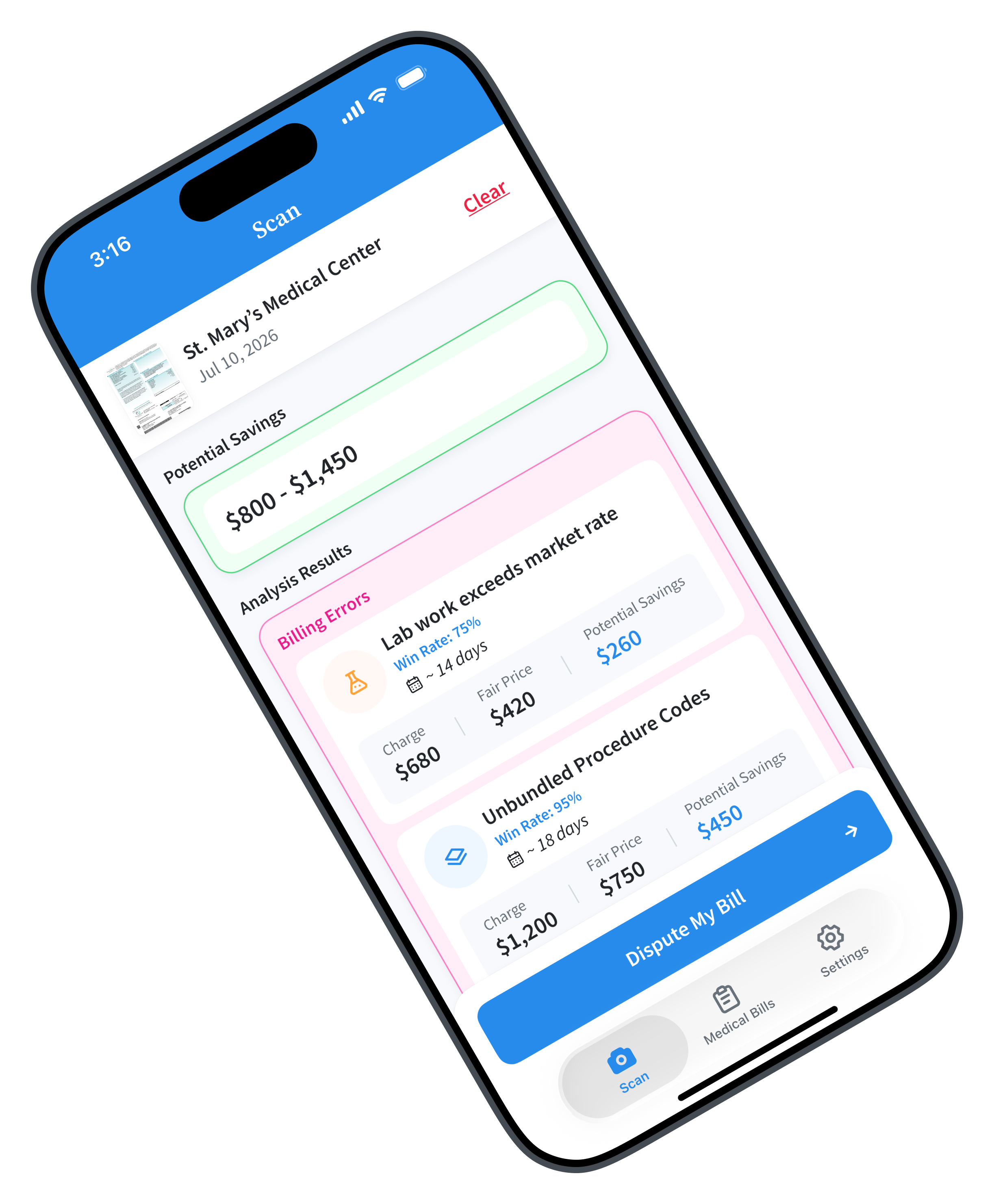
The thread through all of these steps is the same. Before you pay a medical bill or a collection, make sure the amount is actually right. That is the part MedAdvocate is built to help with. If a charge is wrong, here is how to dispute a medical bill in writing, which also protects you once an account is with a collector. For a large or drawn out case, a medical bill advocate can handle the back and forth for you.