An explanation of benefits, or EOB, is a summary your health insurer
sends after it processes a claim. It shows how the cost of your care
was split between your plan and you. It is not a bill, and you do not
send payment from it.
What an explanation of benefits is
After you see a doctor or visit a hospital, the provider sends a claim
to your insurance company. Once the plan processes that claim, it
sends you an explanation of benefits. The EOB lists the service, the
date, the amounts involved, and how much of the cost the plan covered.
The most important thing to know is that an EOB is not a bill. It is a
record of how your claim was handled. A separate bill comes from the
provider, and that is the document that asks for payment. If the two
do not agree, the EOB is your reference for what you actually owe.
When and how you get an EOB
You do not sign up for EOBs on their own. Your insurer sends one after
it finishes processing a claim, so an EOB follows your care rather than
coming before it. If you saw a doctor, had a test, or filled a
prescription that ran through your plan, an EOB for that visit usually
shows up within a few weeks.
How it arrives depends on your plan. Many insurers mail a paper EOB to
the address on your account. Most also post the same document in your
online member portal or app, often before the paper copy reaches your
mailbox. If you have not seen one in a while, log in to your plan's
website and look for a section called claims or explanation of
benefits.
Timing varies. Some plans send an EOB within days of processing a
claim, while others batch them and send less often. You may also
receive a separate EOB for each claim, so a single visit that involved
several providers, such as a hospital, a surgeon, and an
anesthesiologist, can produce more than one. Reading each one, rather
than assuming they all say the same thing, is the habit that catches
problems early.
What each section of an EOB means
Most EOBs show the same four amounts for each service, and they tell a
two step story. The first two amounts set the price. The last two
split that price between you and your plan.
Billed amount: the provider's full sticker charge
for the service, before insurance. It is often the highest number on
the page, but it is not what anyone actually pays.
Allowed amount: the price your plan and the provider
agreed on. The difference between the billed amount and the allowed
amount is written off when the provider is in your network. Nobody
pays that difference.
Plan paid: the share of the allowed price your
insurance pays to the provider.
Your responsibility: the rest of the allowed price,
which you owe. It comes from your copay, deductible, and coinsurance,
and it is the number your bill should match.
Why doesn't insurance pay the whole allowed amount? Because your plan
is designed so you cover part of the price yourself, through your
copay, deductible, and coinsurance.
EOB decoder
Answer the network question and enter the amounts from one line of
your EOB. Nothing you enter leaves your device.
EOBs use different column names. Match them to these fields: Submitted
Charge or Charged Amount is the Billed Amount; Allowed, Considered, or
Covered Charge is the Allowed Amount; Plan Paid or Benefit Amount is
Insurance Paid; and Patient Responsibility or You Owe is Your
Responsibility.
EOB vs bill: how to compare them
An EOB and a bill describe the same visit from two sides. The EOB comes
from your insurer and reports how the claim was processed. The bill
comes from the provider and asks you to pay. Because they come from
different places, they do not always agree. If the bill side is the part
that looks unfamiliar, our guide to
how to read a hospital bill
explains the codes and charges you will see there.
To compare them, find the same service and date on both. Then line up
two numbers: your responsibility on the EOB, and the amount the bill
asks you to pay. When your plan is working normally, those two numbers
match. If the bill is higher than your responsibility, something is
off, and it is worth looking into before you pay.
Mismatches matter because the billed amount is not what you owe. If a
provider bills you the full charge instead of your responsibility, or
bills you for the network write off, you could pay far more than your
share.
Common errors an EOB can reveal
Reading your EOB next to your bill can surface mistakes that are easy
to miss. Watch for these.
Wrong codes
A service coded as something more complex or different from what
happened, which can raise the allowed amount and your share.
Out of network surprises
A provider you expected to be in network processed as out of
network, which shifts more of the cost onto you. If it was a surprise
bill, the
No Surprises Act
may protect you.
Duplicate charges
The same service processed more than once on the same date, so you
are asked to pay for it twice.
What to do when your EOB and bill do not match
If the numbers do not line up, a calm and organized approach usually
sorts it out. If your provider only sent a summary, ask for an
itemized bill
so you can match each charge to the EOB.
Put the EOB and the bill next to each other and match them by
service and date.
Compare your responsibility on the EOB to the amount the bill asks
for. Note every line where the bill is higher.
Call the provider billing office and ask them to rebill the account
to match the EOB. Providers are supposed to bill you your
responsibility, not the full charge.
If the EOB itself looks wrong, for example a wrong code or an out of
network entry you did not expect, call your insurer and ask for a
review or an appeal.
Keep notes of every call, including the date, the name of the
person, and what was said, and keep copies of both documents.
Comparing an EOB and a bill line by line takes patience, and the codes
are not written for patients. That is the part MedAdvocate can help
with. And if what you owe is more than you can afford, you may qualify
to have part of it forgiven through hospital financial assistance; here
is how
medical bill forgiveness
works.
Why you might get an EOB when you did not see a doctor
Sometimes an EOB shows up for care you do not remember getting. That is
worth a closer look, because it means a claim was filed under your name
and your insurance details.
The most common reason is a simple billing error. A provider or their
billing service can enter the wrong member number, mix up two patients
with similar names, or submit a claim for the wrong date. These are
usually cleared up with one call to the provider and, if needed, your
insurer.
A less common but more serious reason is medical identity fraud. If
someone uses your name and insurance to get care or supplies, the claim
runs through your plan and an EOB lands with you. The service on it will
be one you never received, sometimes at a provider you have never
visited. Left unnoticed, it can drain your benefits and leave wrong
information in your medical record. If you confirm a charge is fraud,
you can also report it to the Federal Trade Commission at
identitytheft.gov,
which lays out the steps to limit the damage.
Checking every EOB is how people catch both. When a document lists a
service, a date, or a provider that does not match your care, call your
insurer to ask about the claim, and ask them to open a review if the
charge is not yours. The same careful reading that catches a billing
error also catches fraud, which is why it helps to open each EOB and
each bill rather than setting them aside. If an unpaid bill is heading
toward a collector, you still have time and clear rights; here is what
to know about
medical bills and collections,
and whether
medical bills affect your credit.
And when the EOB and the bill do not match, our step by step guide to
how to dispute a medical bill
shows how to turn that mismatch into a written dispute. If the bill is
large or the dispute drags on, a
medical bill advocate
can take it on for you.
Frequently asked questions
What is an explanation of benefits (EOB)?
An explanation of benefits is a statement your health insurer sends
after it processes a claim for your care. It shows the service, the
amounts involved, how much the plan paid, and how much is your
responsibility. It is a record of how the claim was handled, not a
request for payment.
Is an EOB a bill?
No. An EOB is not a bill and you do not send payment from it. It
comes from your insurance company and explains how a claim was
processed. The bill comes separately from the provider and is the
document that asks you to pay.
What is the difference between an EOB and a bill?
An EOB comes from your insurer and reports how your claim was
processed, including the allowed amount and your responsibility. A
bill comes from the provider and asks you to pay. Your responsibility
on the EOB should match the amount the bill asks for.
What does the allowed amount on an EOB mean?
The allowed amount is the most your plan will count toward a service,
based on its contract with the provider. The difference between the
billed amount and the allowed amount is written off when the provider
is in your network, so you do not owe that difference.
What does "your responsibility" mean on an EOB?
Your responsibility is the part of the allowed amount you owe, made
up of your copay, deductible, and coinsurance. It is the number your
provider is supposed to bill you, and the number your bill should
match.
Why do my EOB and my medical bill show different amounts?
They come from different places. The bill often shows the provider's
full billed charge, while the EOB shows the allowed amount and your
smaller responsibility after insurance. If the bill asks for more
than your responsibility on the EOB, ask the provider to rebill the
account to match.
What errors can an EOB help me catch?
Comparing an EOB to your bill can reveal wrong or upcoded services,
charges processed as out of network when the provider was in network,
and duplicate charges for the same service. Any line where the bill
asks for more than your responsibility is worth questioning.
What should I do if my bill is higher than the EOB says I owe?
Line up the EOB and the bill by service and date, then compare your
responsibility to the amount billed. Call the provider billing office
and ask them to rebill to match the EOB. If the EOB itself looks
wrong, call your insurer to ask for a review or appeal.
How long should I keep my EOBs?
Keep an EOB for at least one year, in case a claim needs to be
corrected or matched against a later bill. Hold on to them longer, for
several years, if you are in ongoing treatment, working through a
deductible across the year, or disputing a charge, since older EOBs
can support your case.
Why did I get an EOB when I did not visit a doctor?
An EOB means a claim was filed under your name and insurance. Often it
is a billing error, such as a wrong member number or a mixed up
patient, which a call to the provider can fix. It can also be a sign
of medical identity fraud, where someone used your details to get
care. Compare the service, date, and provider to your own records, and
call your insurer to open a review if the claim is not yours.
Does your bill match your EOB?
Your provider's bill should ask for the responsibility amount on your
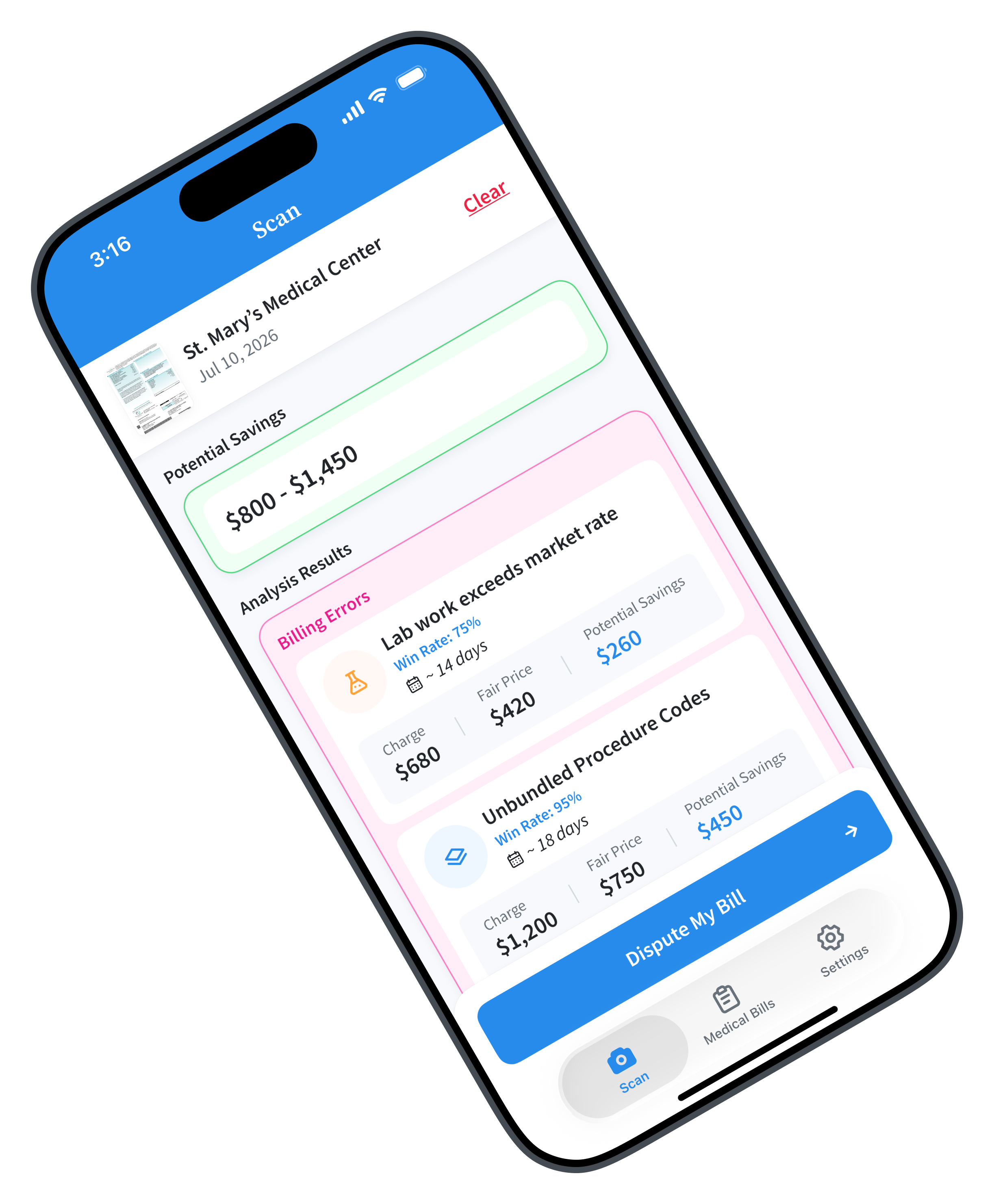
EOB. Scan your bill with MedAdvocate to check each charge against
common billing errors and see what is worth questioning.